Thursday, March 15, 2012

Statement by Commissioner for Climate Action Connie Hedegaard following yesterday's Environment Council

''Poland's no to the European Commission low-carbon Roadmap is unfortunate, but it will not stop Europe from moving on with its transition to a low-carbon economy.
The bad news was that Poland blocked Council conclusions for the second time. The good and encouraging news is that Poland was the only country to block. The Presidency and the other 26 member states explicitly asked the Commission to move on, and that is what we will do.
The day before the Council the Polish minister signed off an op-ed saying that EU should only have the 2050 reduction objective. How to achieve it should be up to members states themselves as a matter of "subsidiarity".
Let's imagine that we said the same about the economic crisis, that the EU defined the economic target for 2050 but how to reach it and whether anything happened in the next 38 years would be an exclusive matter for individual member states. Everyone can see that this wouldn’t work. This is also true when it comes to our climate policies.
The EU can't work like this. The EU is a democratic community where negotiations are about give and take to get a good result for all. We can't move forward if the most reluctant one dictates the pace to the rest.
The Commission's job is to take care of the common European interest. As late as last week all EU Heads of States and Government urged us to move forward on the low-carbon transition. This is what we will do. There are already a number of proposals from the Commission paving the way, e.g. the energy efficiency directive that the European Council wants to be adopted already in June and the Commission's budget proposal with an ambitious climate mainstreaming.
Now the Commission will work on further measures needed to reach the cost-efficient milestones that will lead us to a low-carbon future''.

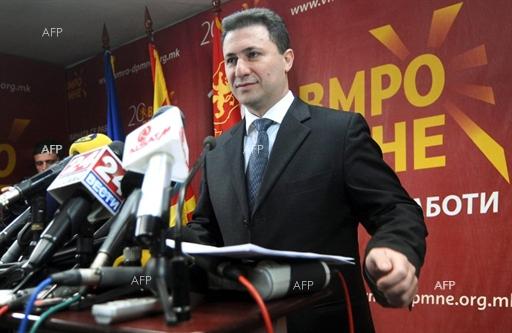
Start of the High Level Accession Dialogue with the government of the former Yugoslav Republic of Macedonia

Prime Minister Gruevski
''I am convinced that your future lies within the European family. Together we want to make it sure that real, tangible and visible progress can be achieved on the path towards European integration.
I want to commend Prime Minister Gruevski for his personal commitment to the High Level Accession Dialogue. Your personal engagement, Prime Minister, is precious and a key factor for success. Your initiative to strengthen freedom of expression by decriminalising defamation is a good example. I can assure you that I am committed to supporting your reform efforts. What we are starting today is about comprehensive process, active political dialogue between us and also about inclusive framework for reforms. I stress again that these efforts are aimed to bring benefits to all people of your country.
Today is a new opportunity to focus on a number of priorities that can help the social and economic development of the country. We have identified the rule of law, the reform of public administration, freedom of expression, electoral reform and strengthening the market economy as key elements. By moving closer to European standards in these areas, all communities and all citizens will benefit.
We want to focus on action and we want to agree on what are the key measures to take and how the European Commission can help. We want to work together with you in order to make membership a reality. I look forward to a good start today and to the continuation of our high level dialogue.'' stated Commissioner Füle today in Skopje, on the occasion of the starting of the High Level Accession Dialogue with the government of the former Yugoslav Republic of Macedonia.

Vital EIB support of EUR 130 million for energy production in Cyprus

The European Investment Bank provides EUR 130 million to the Electricity Authority of Cyprus for a new production unit to enhance electricity supply in Cyprus.
The finance documentation was signed today in a public ceremony at the Ministry of Finance in Nicosia in the presence of Mr. Kikis Kazamias, Cypriot Minister of Finance. The finance contract was signed for the EIB by Vice-President Plutarchos Sakellaris and for the Electricity Authority of Cyprus by the President of the Board of Directors, Mr. Harris Thrassou.
EIB Vice-President Plutarchos Sakellaris, whose responsibilities include EIB’s lending activities in Cyprus as well as energy issues, said on the occasion in Nicosia today: “In 2011 our aggregate lending in Cyprus totalled EUR 180 million. It was for roads and education. I am delighted to sign today a vital finance contract for energy production at the Vassilikos power plant in Cyprus. This is our sixth loan with the Electricity Authority of Cyprus. Through our long-lasting and good cooperation we were able to provide significant support to the generation, transmission and distribution of electricity in Cyprus. This loan comes in good time to cater to the urgent need for energy production in the country after the explosion at the adjacent Mari Naval Military Base last July.
Mr. Kikis Kazamias
The EIB has supported a number of energy projects in Cyprus, mostly in cooperation with the Electricity Authority of Cyprus. This includes loans totaling EUR 330 million for the upgrading of the electricity transmission and distribution network, and EUR 30 million for a new internal combustion engine power plant at the Dekeleia power station in the district of Larnaca in Cyprus. A further EUR 200 million has gone to the Vassilikos electricity power plant, one of the largest investments undertaken in Cyprus. Both electricity production plants can be retrofitted to natural gas, once this becomes available on Cyprus. Electricity demand in Cyprus is rising and plants of this type provide a rapid response to load changes, which makes them suitable for generation of electricity during peak demand This will help meet demand changes in particular during the summer months, when cooling and electricity needs are highest.

Statement by Environment Commissioner Janez Potočnik on the Ministerial Declaration of the 6th World Water Forum

On the second day of the 6th World Water Forum in Marseille, EU Commissioner for the Environment Janez Potočnik endorsed the Ministerial Declaration on Water on behalf of the European Union, together with ministerial delegations from more than 100 countries.
Commissioner Potočnik explained that the Declaration's main aims – access to safe drinking water and sanitation, available water resources for food security and energy production, integrating policies, cooperation and financing at national and international level to meet the water challenges – are in line with and complementary to EU policies.
He added, "I trust today's Declaration will be used by all parties to convey this message at the Rio +20 Conference, which will be an excellent opportunity to put water on top of national and international agendas. The Declaration supports EU objectives for water, green economy, the implementation of the Rio Conventions, improved governance and international cooperation.
I am pleased to see the focus on integrated river basin management, the need to mainstream water policy objectives into other policy areas, and the importance of taking full account of the interconnected challenges that affect the food, water and energy sectors. The Declaration also underlines the importance of addressing water problems through development cooperation policy, and its support to the achievement of the Millennium Development Goals is especially welcome."
The EU has agreed that water, particularly water efficiency, should be one of the top five priority areas in which clear operational targets with agreed time frames should be addressed at Rio.
The EU is committed to sustainable water management, and to ensuring good quality. Despite good progress over recent decades, the EU still faces considerable problems with water quality and quantity. The Declaration contains messages that will be taken up in the "Blueprint to Safeguard Europe's Water Resources" a strategic document that will put forward policy recommendations for the future EU freshwater policy later this year. The Blueprint will identify current gaps and future priorities, steer water policy development until 2020, using an analysis that integrates economic and climate modelling till 2050.
Also present at the World Water Forum were Development Commissioner Andris Piebalgs, Climate Action Commissioner Connie Hedegaard and International Cooperation, Humanitarian Aid and Crisis Response Commissioner Kristalina Georgieva.

Statement by EU Justice Commissioner Reding on the positive vote by the European Parliament on new EU legislation regarding cross-border successions

EU Justice Commissioner Viviane Reding, the European Commission’s Vice-President, said after the vote in the European Parliament's plenary in Strasbourg:
"The death of a family member is a sad and traumatic event, without additional legal headaches. I therefore welcome today's vote of the European Parliament plenary, which constitutes a major step towards providing legal certainty for thousands of families confronted with international successions. I would like to congratulate in particular rapporteur Kurt Lechner, who worked tirelessly to successfully steer this legislation through the European Parliament. In the interests of the more than 12 million EU citizens potentially affected by the new EU law on international successions, I hope a final agreement between the Parliament and the Council can now be reached as soon as possible. I know that the Danish Presidency is working on a final agreement, and I strongly support their efforts."
Following today's vote in the European Parliament plenary, the new EU legislation (a Regulation) now requires the approval of the Council of the 27 Justice Ministers.
Legislation on cross-border successions
The rules applicable to international successions are highly complex and difficult to predict. Legislation governing jurisdiction and the law applicable vary considerably from one Member State to another. This leads to great legal uncertainty and distress for people who want to plan their succession and their heirs, or who may become embroiled in legal and administrative difficulties on inheriting property in another Member State. For example, if a German citizen with a house in southern France dies, would French or German succession law apply to his property? The new EU Regulation will bring legal certainty to this issue.
There are around 4.5 million successions a year in the EU, of which about 10% have an international dimension. These successions are valued at about €123 billion a year.
On 14 October 2009, the Commission proposed an EU Regulation to simplify the settlement of international successions (see IP/09/1508). Under the new EU Regulation, there would be a single criterion for determining both the jurisdiction of the authorities and the law applicable to a cross-border succession: the deceased's habitual place of residence. People living abroad will, however, be able to opt to have the law of their country of nationality apply to the entirety of their succession.
Today’s vote is an important step towards the introduction of a European Certificate of Succession, which will allow people to prove that they are heirs or administrators of a succession without further formalities throughout the EU. This will represent a considerable improvement from the current situation in which people sometimes have great difficulty exercising their rights. The result will be faster, cheaper procedures.
To help citizens become better informed about these laws, the Council of Notaries of the EU has created a website (www.successions-europe.eu), with the support of the European Commission, in 22 EU languages plus Croatian.
The proposal for an EU Regulation that facilitates international successions is a concrete example of how the EU works towards creating an area of justice that will ease citizens' daily lives, as set out by Vice-President Reding on 20 April 2010 in an Action Plan for 2010-2014 as well as in the EU Citizenship Report 2010 (see IP/10/1390).

Tevatron experiments report latest results in search for Higgs boson

Using different search techniques, Tevatron physicists see hints of Higgs boson sighting consistent with those from LHC

Batavia, Ill. --- New measurements announced today by scientists from the CDF and DZero collaborations at the Department of Energy’s Fermi National Accelerator Laboratory indicate that the elusive Higgs boson may nearly be cornered. After analyzing the full data set from the Tevatron accelerator, which completed its last run in September 2011, the two independent experiments see hints of a Higgs boson.
Physicists from the CDF and DZero collaborations found excesses in their data that might be interpreted as coming from a Higgs boson with a mass in the region of 115 to 135 GeV. In this range, the new result has a probability of being due to a statistical fluctuation at level of significance known among scientists as 2.2 sigma. This new result also excludes the possibility of the Higgs having a mass in the range from 147 to 179 GeV.
Physicists claim evidence of a new particle only if the probability that the data could be due to a statistical fluctuation is less than 1 in 740, or three sigmas. A discovery is claimed only if that probability is less than 1 in 3.5 million, or five sigmas.
This result sits well within the stringent constraints established by earlier direct and indirect measurements made by CERN’s Large Hadron Collider, the Tevatron, and other accelerators, which place the mass of the Higgs boson within the range of 115 to 127 GeV. These findings are also consistent with the December 2011 announcement of excesses seen in that range by LHC experiments, which searched for the Higgs in different decay patterns. None of the hints announced so far from the Tevatron or LHC experiments, however, are strong enough to claim evidence for the Higgs boson.
“The end game is approaching in the hunt for the Higgs boson," said Jim Siegrist, DOE Associate Director of Science for High Energy Physics. “This is an important milestone for the Tevatron experiments, and demonstrates the continuing importance of independent measurements in the quest to understand the building blocks of nature.”
Physicists from the CDF and DZero experiments made the announcement at the annual conference on Electroweak Interactions and Unified Theories known as Rencontres de Moriond in Italy. This is the latest result in a decade-long search by teams of physicists at the Tevatron.
“I am thrilled with the pace of progress in the hunt for the Higgs boson. CDF and DZero scientists from around the world have pulled out all the stops to reach this very nice and important contribution to the Higgs boson search,” said Fermilab Director Pier Oddone. “The two collaborations independently combed through hundreds of trillions of proton-antiproton collisions recorded by their experiments to arrive at this exciting result.”
Higgs bosons, if they exist, are short-lived and can decay in many different ways. Just as a vending machine might return the same amount of change using different combinations of coins, the Higgs can decay into different combinations of particles. Discovering the Higgs boson relies on observing a statistically significant excess of the particles into which the Higgs decays and those particles must have corresponding kinematic properties that allow for the mass of the Higgs to be reconstructed.
“There is still much work ahead before the scientific community can say for sure whether the Higgs boson exists,” said Dmitri Denisov, DZero co-spokesperson and physicist at Fermilab. “Based on these exciting hints, we are working as quickly as possible to further improve our analysis methods and squeeze the last ounce out of Tevatron data.”
Only high-energy particle colliders such as the Tevatron and LHC can recreate the energy conditions found in the universe shortly after the Big Bang. According to the Standard Model, the theory that explains and predicts how nature’s building blocks behave and interact with each other, the Higgs boson gives mass to other particles.
“Without something like the Higgs boson giving fundamental particles mass, the whole world around us would be very different from what we see today,” said Giovanni Punzi, CDF co-spokesperson and physicist at the National Institute of Nuclear Physics, or INFN, in Pisa, Italy. “Physicists have known for a long time that the Higgs or something like it must exist, and we are eager to finally pin this phenomenon down and start learning more about it.”
If a Higgs boson is created in a high-energy particle collision, it immediately decays into lighter more stable particles before even the world’s best detectors and fastest computers can snap a picture of it. To find the Higgs boson, physicists retraced the path of these secondary particles and ruled out processes that mimic its signal.
The experiments at the Tevatron and the LHC offer a complementary search strategy for the Higgs boson. The Tevatron was a proton/anti-proton collider, with a maximum center of mass energy of 2 TeV, whereas the LHC is a proton/proton collider that will ultimately reach 14 TeV. Because the two accelerators collide different pairs of particles at different energies and produce different types of backgrounds, the search strategies are different. At the Tevatron, for example, the most powerful method is to search the CDF and DZero datasets to look for a Higgs boson that decays into a pair of bottom quarks if the Higgs boson mass is approximately 115-130 GeV.  It is crucial to observe the Higgs boson in several types of decay modes because the Standard Model predicts different branching ratios for different decay modes. If these ratios are observed, then this is experimental confirmation of both the Standard Model and the Higgs.
“The search for the Higgs boson by the Tevatron and LHC experiments is like two people taking a picture of a park from different vantage points,” said Gregorio Bernardi, DZero co-spokesperson at the Nuclear Physics Laboratory of the High Energies, or LPNHE, in Paris . “One picture may show a child that is blocked from the other’s view by a tree. Both pictures may show the child but only one can resolve the child’s features. You need to combine both viewpoints to get a true picture of who is in the park. At this point both pictures are fuzzy and we think maybe they show someone in the park. Eventually the LHC with future data samples will be able to give us a sharp picture of what is there. The Tevatron by further improving its analyses will also sharpen the picture which is emerging today.”
This new updated analysis uses 10 inverse femtobarns of data from both CDF and DZero, the full data set collected from 10 years of the Tevatron’s collider program. Ten inverse femtobarns of data represents about 500 trillion proton-antiproton collisions. Data analysis will continue at both experiments.
“This result represents years of work from hundreds of scientists around the world,” said Rob Roser, CDF co-spokesperson and physicist at Fermilab. “But we are not done yet – together with our LHC colleagues, we expect 2012 to be the year we know whether the Higgs exists or not, and assuming it is discovered, we will have first indications that it behaves as predicted by the Standard Model.”

Wednesday, March 14, 2012

Freedom then and now March 25th Encyclical By Metropolitan Sotirios


It is a fact accepted by all that a more precious thing than freedom does not exist. A person who is not free suffers. He is oppressed. He is not even considered a human being by those who oppress him.
For which freedom do we speak of? First and foremost, we speak of personal freedom. Of course, we also speak of ethnic freedom. Of religious freedom. Of political freedom.
The person who is truly free is the one who is master of himself. He governs himself and is not controlled by his passions. Whoever is master of himself enjoys all the other victories that come with it.
Ethnic freedom is fundamental. This came to the forefront recently, and not from the beginning. This became a fact when the nations were established.
Religious freedom also became a necessity later on. This took place when religions were founded. When humanity lost faith in God and created these religions When man lost his personal relationship with God.
Political freedom is of utmost importance. You have ethnic freedom; that is, a country has its freedom. But in some cases, you are not free within the political system of one’s country – in other words, the political freedom of the citizen. The nation is not enslaved to other countries, but the citizen is enslaved to the dictator or to the bad ruler.
Man had true freedom when he was created by the hands of the Creator. Unfortunately, he relinquished his freedom for material nourishment. He became a slave to himself. To his passions.
It is a great wonder, but man only has true freedom when he follows the will of God. God has no need of this for Himself. Yet, whenever He thinks of man, He deals with him as a Father for His children, always thinking what is best for them.
With the fall of man, humanity became a slave to himself; to his passions; to his sins. He could not be freed by himself. The Creator came in the Person of Christ. The Only-Begotten Son of God became a man. He took on human flesh to free man. On this day of the Annunciation, the Archangel Gabriel revealed the Will of God the Most-Holy Theotokos and Ever-Virgin Mary. God became man. Christ sacrificed Himself for humanity. He gave humanity its freedom once again. He opened wide the doors of Paradise. From then on, man was able to gain access to Paradise through the proper use of his freedom and could then become a citizen of Paradise forever.
This is what God awaits from us. This will only become a reality, however, if man uses his freedom correctly. If he does not become enslaved to his passions. If, during the course of his life, he does not lose his personal relationship and contact with God.
March 25th, 1821 is a landmark for our national freedom. We lost it on May 29, 1453. We lost it because malevolent people were jealous of us and fought us in war. The enemies were many, two being the most prominent: the Crusaders and the Ottomans. We ourselves were not without blame.
We gained our national freedom during the Revolution of 1821; with the true sacrifices of our forebearers during that time; with the return of our forebearers to true freedom, to the personal relationship with God Himself. They fought and sacrificed themselves for the holy faith of Christ and for the freedom of their Motherland.
Greece today has ethnic freedom. Yet, does every Greek (wherever he or she may be in the world) have religious freedom, political freedom and personal freedom?
            The financial crisis in our homeland Greece proves that the Greek has lost his political, religious and personal freedoms. The experience will become a lesson. When every Greek acquires his personal freedom (that is, freedom from his passions), when all Greeks have their personal freedom, then Greece as a whole will enjoy its freedom and its prosperity.
Let us not try to put all the blame on others. Of course, enemies exist. They not only exist, but they also lurk around us. They lurk around us to see us lose our personal freedom, so they may seize away from us every freedom. The greatest responsibility, though, is borne by us. And when we have our national freedom and we waste it away, we bear all the responsibility.
As we celebrate March 25th this year as a religious and national holiday, I call upon all of us to mend our ways; to clearly understand the blessings of freedom that I mentioned above; to compare the freedom that we had when we were not slaves to our passions - the freedom and the joy we had before we lost our national freedom. Let us celebrate, because we have our national freedom. Let us be vigilant to retain our religious freedom, our political freedom, our personal freedom and may we never lose our ethnic freedom.
We who live in Canada have ethnic, religious and political freedom. Whether or not we have personal freedom, this can only be answered by each person individually.
I pray that the Virgin Mary always intercedes for us. May the Incarnate Christ always abide within us. May our Motherland Greece always have ethnic, religious, political and personal freedoms for its citizens. May we all live free. We should always be thankful to our heroic forebearers who sacrificed themselves in order that we may enjoy our national freedom. May we live reconciled to God. May we have a personal relationship with Him. May we become true human beings, in every sense of the word. May we live and breathe our freedom. May we understand that the basis of every other freedom is our personal freedom.

With fatherly love and fervent prayers,

+ Metropolitan Archbishop Sotirios
Head of the Greek Orthodox Church in Canada
Related Posts Plugin for WordPress, Blogger...